Down Payment Assistance
What are the income limits for NJHMFA down payment assistance?

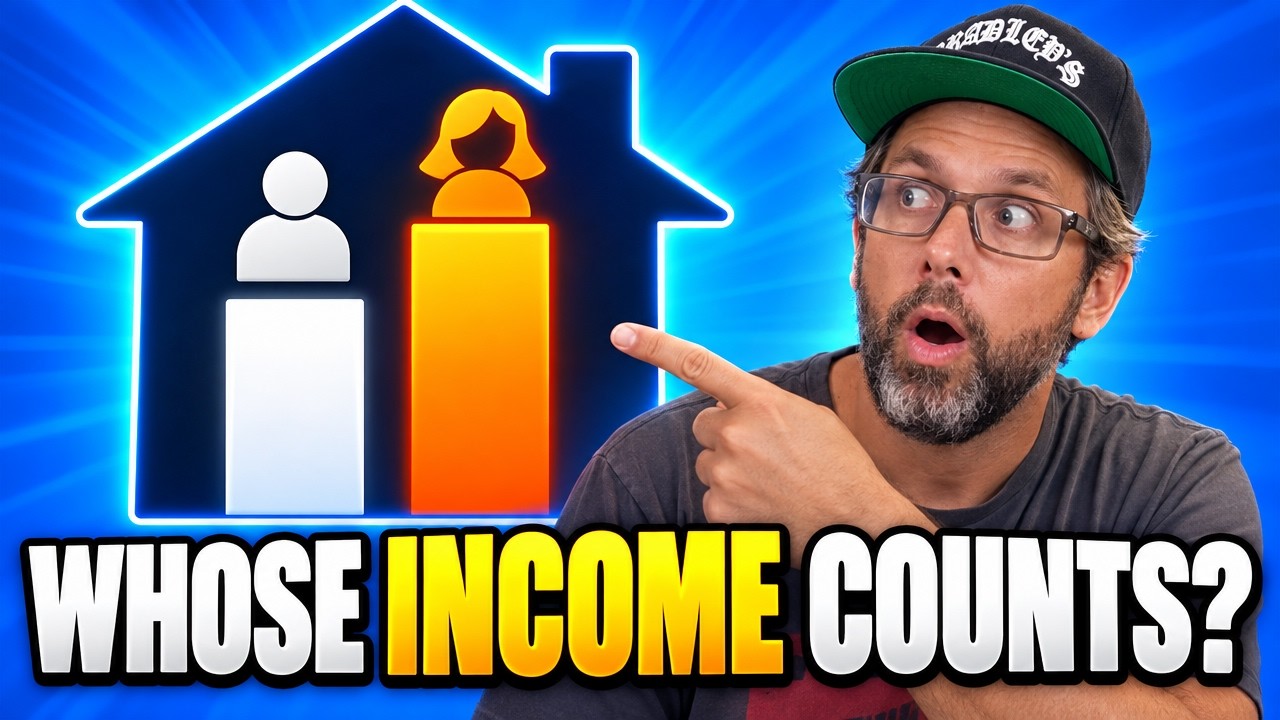
NJHMFA income limits in 2026 depend on the mortgage program, with First-Time Homebuyer limits also varying by the property’s county, household size and Urban Target Area status. There is no single statewide income ceiling for down payment assistance; eligibility requires comparing the income counted under your program with its applicable limit, as explained in NJHMFA’s program materials.
Reading the wrong limit could make you rule yourself out before anyone reviews your circumstances. The surprising part? Income you don’t need to qualify for the mortgage can still matter for program eligibility.
At The Brondt Cook Group at Acre Mortgage in Cherry Hill, my approach is education first, funding second. That starts with five checks: program, location, whose income counts, documentation and the current table.
1. Identify the mortgage program first
“Brad, I asked about assistance. Why are we talking about the mortgage?”
Because NJHMFA down payment assistance must be paired with an eligible NJHMFA first mortgage—the main loan used to buy the home. It isn’t a separate pot of money you automatically attach to any mortgage, according to NJHMFA’s assistance overview.
Think of it as a package. The mortgage has requirements. The assistance has requirements. Both have to work.
NJHMFA’s First-Time Homebuyer Mortgage Program and HFA Advantage have different income-limit tables. HFA Advantage is a conventional mortgage option, while the First-Time Homebuyer program uses government-insured or guaranteed financing, as described in the official program summaries.
Here’s a hypothetical mistake: you find a limit online, see that your income exceeds it and close the browser. But nobody established which program that number belonged to.
You haven’t checked your situation. You’ve compared your income with a number. Those are different things.
Also, keep the income limit separate from the assistance amount. One answers how much income you can have; the other answers how much help might be available.
Eligible buyers meeting additional first-generation requirements may receive combined assistance of up to $22,000. That maximum isn’t available to everyone, and the assistance is a second loan with forgiveness conditions—not unconditional cash. See NJHMFA’s first-generation assistance details.
2. Match the property and household to the table
For the First-Time Homebuyer program, the relevant category depends on:
- The county where you’re buying.
- Household size.
- Whether the property qualifies for an Urban Target Area designation.
That means the purchase property’s county—not necessarily where you rent or work.
The official First-Time Homebuyer tables effective June 17, 2026 show:
- Standard income limits: $134,600–$178,020 across county and household-size categories.
- Urban Target Area limits: $161,520–$216,720 across those categories.
Those are ranges across different situations, not limits everybody can choose from.
Here’s the local example. In Camden County, the standard table lists $134,600 for a one- or two-person household and $154,790 for a household of three or more. Same county. Different household-size category. These figures appear in the June 17, 2026 table.
A town name alone doesn’t establish Urban Target Area eligibility. NJHMFA warns that an entire municipality may not qualify; its Site Evaluator helps check the location more precisely.
Imagine comparing homes in different areas. Keep the eligibility check attached to each property instead of carrying one number through the entire search.
“My friend bought nearby, so I’ll use their limit.”
No. Use the property you’re considering.
3. Determine whose income actually counts
Finding the correct ceiling is only half the comparison. The other half is calculating the right income.
Two terms matter:
- Qualifying income: income the lender uses to evaluate your ability to repay.
- Compliance income: income checked against the program’s eligibility ceiling.
Under NJHMFA’s First-Time Homebuyer rules, household income includes borrowers, co-borrowers and non-borrowing spouses or domestic partners. The earlier seller’s guide uses qualifying income for HFA Advantage’s compliance calculation. These distinctions appear in NJHMFA’s seller’s guide.
There is an important upcoming change. NJHMFA’s October 2026 update notice says revised rules apply to new reservations beginning October 19, 2026. Certain HFA Advantage and Homeward Bound scenarios will require compliance income beyond qualifying income, so those figures should not be assumed identical.
Now make it practical. You’re applying alone, and your spouse will live in the home without being a borrower. You think their paycheck doesn’t matter because you don’t need it for the mortgage.
Under First-Time Homebuyer household-income rules, that assumption can be wrong. Provide the real household information rather than trying to rearrange an application around an online number.
Gross pay matters, too. It means income before payroll deductions—not the amount deposited after taxes, insurance and retirement contributions. NJHMFA’s income affidavit calls for annualized gross income and addresses sources beyond base wages, including overtime, bonuses and business income.
Your job isn’t to become an underwriter overnight. Your job is to provide a complete picture.
4. Document the income instead of estimating it
Common starting documents for a mortgage review include:
- Recent pay statements.
- W-2 forms.
- Tax returns.
- Documentation of other income.
Self-employed borrowers and people with irregular income may need additional records. Exact requests depend on the circumstances, as the Consumer Financial Protection Bureau’s application-packet guide explains.
The documents should explain the income, not just produce a pile of attachments.
For example, your pay statement shows base wages and overtime, but you describe only your salary. The useful question is: “How is the overtime being treated for this program, and what documentation supports that treatment?”
That beats leaving it out because you weren’t sure.
Or imagine you recently changed jobs. Your older tax documents and current pay may describe different circumstances. Explaining the change early gives the lender a clear issue to verify. Documents may also need updating during the process, according to the CFPB’s paperwork guidance.
The self-check is simple: could someone follow your income from the documents to the calculation?
Our down payment assistance assessment helps start a review of your circumstances and possible assistance. It does not replace income verification or a documented lending decision. Its purpose is to turn “Do I make too much?” into a scenario the team can review.
5. Verify the applicable table and effective date
For NJHMFA income limits in 2026, the starting point is the official homebuyer program page, followed by the selected program’s consumer fact sheet and income-limit information. The lender resource page also maintains program documents and update bulletins.
The program heading matters before the dollars.
For example, the HFA Advantage table effective June 17, 2026 lists maximum allowable program income ranging from $161,520 to $185,760 by county. It also has a separate lower-cost mortgage-insurance column. That second column is not the overall program ceiling.
Same page. Different questions.
Check the program name, effective date and column heading together—not just the dollar amount.
Search results can also lead to UHAC affordable-housing regional limits or tax-credit housing income limits. Those are different tables, not substitutes for the mortgage program’s limits.
As of October 17, 2026, NJHMFA’s lender page lists a revised seller’s guide effective October 19, 2026, alongside a guide for earlier pipeline loans. The applicable reservation date and program requirements matter—not simply which PDF looks newest.
An undated screenshot is not a homebuying plan.
Put the right income beside the right limit
The useful answer isn’t one statewide number. It’s your documented income compared with the correct program table and applicable rules.
The Brondt Cook Group’s down payment assistance assessment gives prospective New Jersey buyers a starting point for reviewing which assistance options may fit. Eligibility and assistance amounts remain subject to verification and other program requirements.
Complete the assessment: See how much you qualify for.
Frequently asked questions
What is the NJHMFA income limit for a single person in Camden County? +
The standard First-Time Homebuyer table effective June 17, 2026, lists $134,600 for a one- or two-person household in Camden County. A different program or qualifying Urban Target Area property can have a different ceiling, so that figure is not universal. See the official table.
Does my spouse’s income count if they aren’t on the mortgage? +
Under the First-Time Homebuyer program, NJHMFA includes non-borrowing spouses and domestic partners in its household-income definition. Other programs use different calculations, so the selected program and applicable guide must be checked, as explained in NJHMFA’s seller’s guide.
Are NJHMFA income limits based on take-home pay? +
The First-Time Homebuyer program uses annualized gross income rather than your paycheck after deductions. Its calculation can include income beyond base salary, as outlined in NJHMFA’s income affidavit.
Are affordable-housing income limits the same as NJHMFA mortgage limits? +
No—the UHAC regional income tables address a separate affordable-housing framework. For mortgage assistance, the relevant source is the selected program’s information on NJHMFA’s homebuyer page.
Does being below the income limit mean I qualify for assistance? +
No—the income ceiling is only one requirement. Mortgage qualification, property eligibility and other program conditions still apply, as described in NJHMFA’s program materials.

About the author
Brad Brondt — Branch Manager, The Brondt Cook Group at Acre Mortgage & Financial, Inc.
NMLS #242550
I’m Brad Brondt, a mortgage loan officer and Branch Manager of The Brondt Cook Group at Acre Mortgage & Financial, Inc. in Cherry Hill, New Jersey (NMLS ID 242550). I help homebuyers, homeowners and real-estate investors understand their financing options before they make a commitment. Since entering the mortgage business in 2009 after earning my finance degree from Rowan University, I have built my approach around a straightforward principle: education first, funding second. Credentials: NMLS ID 242550; Licensed in New Jersey and Pennsylvania; Branch Manager, Acre Mortgage & Financial, Inc. (Cherry Hill, NJ); Finance, Rowan University; In the mortgage business since 2009. Expertise: First-time homebuyers; purchase and refinance (cash-out, rate-and-term, PMI removal, home equity); investor financing (DSCR, fix-and-flip, bridge); self-employed and non-QM programs; solutions for unique/specialty properties; focus on South Jersey and the Philadelphia suburbs; team footprint across NJ, PA, DE, and VA.
More about Brad →Ready to talk numbers?
Schedule a 15-minute call. We'll walk through your situation and show you what's actually possible — no pressure, no pitch.
Book a call

