Loan Programs
What is a DSCR loan, and how does it work for rental properties?

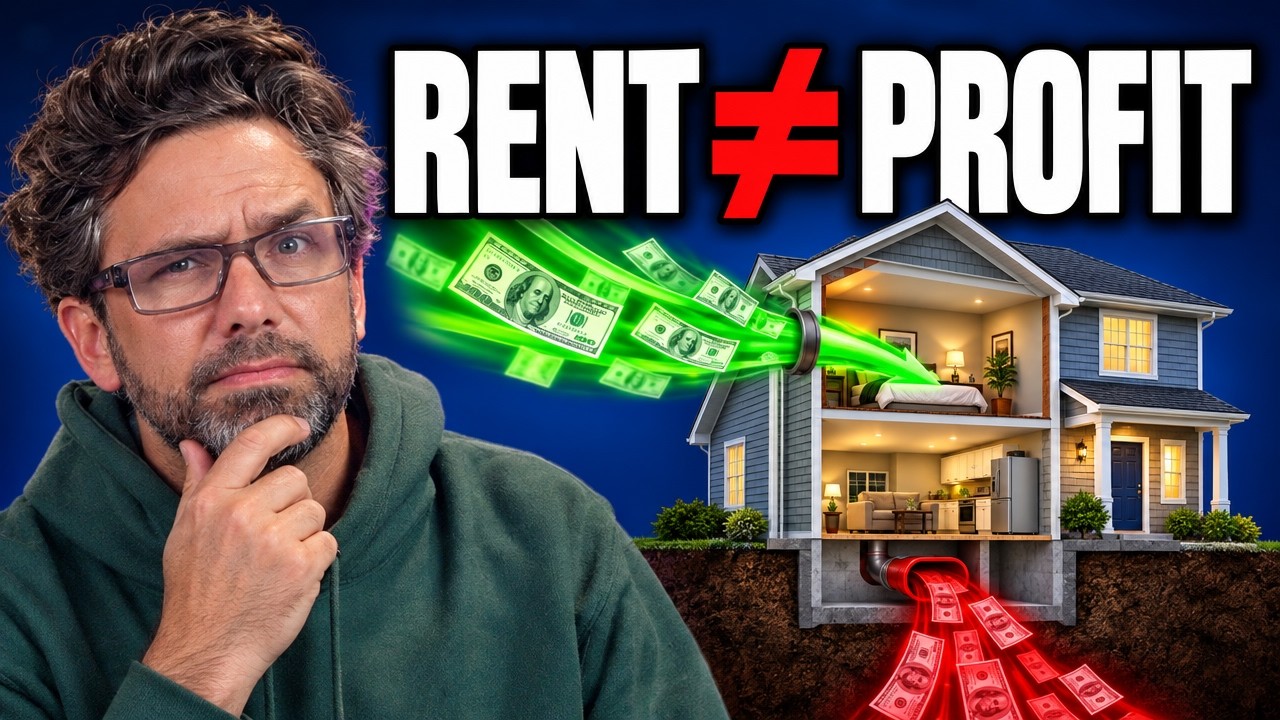
A DSCR loan is an investment-property mortgage that uses rental-property income analysis instead of traditional paycheck-based income qualification. The lender evaluates the property’s rental coverage along with borrower and property requirements, so a qualifying ratio alone does not establish approval or profitability. Axos Bank explains this rental-income approach. (axosbank.com)
That distinction matters before you commit money to a rental. Financing eligibility and investment performance are different questions.
My approach at The Brondt Cook Group at Acre Mortgage is education first, funding second. These five checks help separate a workable financing option from a property that only looks good in a calculator.
1. What does the debt service coverage ratio measure?
DSCR stands for debt service coverage ratio. Plain English: how well the income being counted covers the payment being counted.
The ratio is a financial measurement. A DSCR mortgage is a loan program that uses that measurement in qualification. Same letters. Different things.
For many residential rental programs, the calculation is:
Accepted monthly rent ÷ qualifying monthly housing payment = DSCR
That payment commonly includes:
- Principal—the amount going toward the loan balance.
- Interest—the borrowing cost.
- Property taxes.
- Insurance.
- Association dues, when applicable.
Ternus publishes this residential rental formula. Specific payment calculations can vary by program and loan structure. (ternus.com)
Consider a hypothetical DSCR loan example where accepted rent exactly matches the qualifying payment:
- A ratio of one: accepted rent equals that payment.
- Above one: accepted rent exceeds that payment.
- Below one: accepted rent falls short.
Those comparisons describe coverage—not your complete investment return.
Commercial-property calculations can use different inputs. Commercial lenders commonly divide net operating income by annual debt service. Net operating income means property income after operating expenses, before debt payments, as described in the OCC’s commercial real estate lending handbook. (occ.gov)
When someone says a property has a strong DSCR, the next question is: Using which calculation?
Clear, not clever. Know what went into the number.
2. Does the borrower still have to qualify?
Yes. The property doesn’t walk into closing and sign the paperwork.
Using rental-property analysis instead of traditional personal-income documentation can be useful for self-employed investors. But it does not eliminate borrower review. Credit, available funds and the property’s appraised value still matter. Lima One’s rental-loan documentation describes reviewing both the investor’s credit and liquidity and the property’s value and rental performance. (limaone.com)
Imagine a hypothetical business owner buying a rental. Accepted rent may support the coverage calculation, but the borrower still needs to document required funds and satisfy the program’s other conditions.
Different qualification method. Still a loan file.
How much money do you need down?
There is no single minimum down payment that applies to every DSCR lender, property and transaction. Purchase financing, rate-and-term refinancing and cash-out refinancing can have different requirements. Published rental-loan program parameters illustrate those distinctions. (ternus.com)
Don’t budget only for the down payment. Separate:
- Cash needed to complete the purchase, including applicable closing costs.
- Required reserves, meaning funds the lender requires you to have available beyond closing.
For example, Visio’s lending process distinguishes purchase cash to close from required reserves. (visiolending.com)
Imagine using almost every available dollar to acquire the property, then discovering you also need money left over. The property may look workable. Your funding plan isn’t finished.
3. Whose rent estimate actually counts?
The lender’s accepted rent—not automatically the seller’s estimate, your target or the highest nearby listing.
Lenders evaluate rental documentation and appraisal-based market analysis under their program rules. Market rent is an estimate supported by comparable properties. Axos describes comparing current rent with an appraiser’s rental analysis. (axosbank.com)
Suppose you’re evaluating a hypothetical South Jersey rental. The seller says freshening it up should support higher rent.
Maybe. But a possible future increase and income the lender accepts today are different things.
For an occupied property, both the lease and appraiser’s market-rent estimate can matter. Some programs use the lower amount, with documented exceptions. Vacant-property eligibility also requires review; Axos’s expanded guidelines illustrate transaction-specific restrictions. Those are examples, not universal rules. (axos.com)
Could you explain your rent assumption without saying, “I saw something online”? If not, that’s unfinished homework.
Short-term rentals need another layer of review
A vacation-rental projection is not automatically treated like a long-term lease. Accepted documentation, income calculations and local permission for the intended rental use matter. Axos’s short-term-rental guidelines address these separately. (axos.com)
Picture a property whose financing only works if every strong vacation month repeats. The useful questions are what income the lender recognizes and how your budget handles slower periods.
A DSCR loan calculator can divide your inputs. It cannot establish that those inputs are acceptable.
4. Does passing the ratio mean the rental makes money?
No. Coverage is not the same as profit.
A residential rent-to-housing-payment calculation may leave out costs and interruptions that belong in your operating budget. Investment analysis needs to account for vacancy, repairs and other ownership expenses—not just debt coverage. The OCC’s property-income analysis guidance also emphasizes operating expenses, capital expenditures, vacancy and stressed conditions. (occ.gov)
Imagine a hypothetical property where rent exceeds the housing payment. You look at the difference and think, “Great. That’s what I keep.”
Not yet.
What happens between tenants? What happens when something breaks? The loan payment doesn’t take a vacation because the tenant did.
A property can meet a lender’s coverage requirement while leaving too little room for the costs you actually carry. That isn’t a contradiction. You’re asking different questions:
- The lender: Does this loan file meet our requirements?
- The investor: Does this investment work when ownership isn’t perfectly smooth?
Build the property budget separately from the mortgage calculation. Then pressure-test it.
Suppose rent comes in lower than expected, or a repair arrives before you rebuild savings. Would the plan still be manageable?
That is a planning exercise, not a prediction.
Is a DSCR loan a good loan?
It can be a useful tool when its qualification method and costs fit your rental strategy. A different income approach does not automatically make it better than conventional investment financing.
My recommendation is to compare suitable options against the same property and goal. Our investor-financing overview covers DSCR alongside conventional investment mortgages, bank-statement loans and portfolio solutions. That gives investors context for the unresolved question: Which financing approach deserves a closer look for this property? (thebrondtcookgroup.com)
5. Does the loan allow your actual plan?
Start with occupancy. The rental programs discussed here are for investment properties, not a workaround for financing the home you intend to occupy. Axos identifies its expanded DSCR program as non-owner-occupied only. (axos.com)
Suppose you want to buy a duplex, live upstairs and rent downstairs. Rental income does not automatically make that arrangement eligible for a non-owner-occupied program. Personal use of a vacation property also needs to be disclosed and reviewed.
Next, match the financing purpose. DSCR programs can support purchases and refinancing, but cash-out requires particular attention. Taking equity out creates debt; it is not income the property earned. Permitted proceeds use must fit the program. (limaone.com)
Three more details deserve review:
- Property eligibility: Commercial lending uses DSCR too, but that does not make every commercial building eligible for a residential rental program. A storefront with apartments above it needs its own review. (occ.gov)
- Ownership structure: Some programs allow an LLC—a limited liability company—but may still require a personal repayment guarantee. Visio explains that distinction. (visiolending.com)
- Exit costs: If you intend to sell or refinance soon, determine whether an early-payoff charge applies and how it affects the plan. Lima One describes prepayment structures as part of financing selection. (limaone.com)
Finance the plan you actually have—not the version that sounds easiest to qualify.
Put the financing in context
The ratio is the starting point. Accepted rent, borrower requirements, operating costs and permitted use determine whether the financing deserves further consideration.
The Brondt Cook Group’s investor overview explains several investment-financing approaches and provides a way to discuss your property and intended use.
Frequently asked questions
Do DSCR loans require 20% down? +
Not universally; down-payment requirements depend on the lender, program, property and transaction. Purchase and cash-out requirements can differ, so one program’s minimum is not an industry-wide rule. (ternus.com)
Is a DSCR loan hard to get? +
It uses a different qualification approach, not an automatic approval process. The lender still evaluates the borrower’s credit and liquidity along with the property’s value and rental coverage. (limaone.com)
What is the downside of a DSCR loan? +
A passing coverage ratio can leave ownership costs unaccounted for, so it should not replace an operating budget. Required reserves and possible early-payoff charges also need to fit your available funds and exit plan. (occ.gov)
Can you use a DSCR loan for commercial property? +
Commercial lenders use the DSCR measurement, but residential DSCR programs have their own property-eligibility rules. A commercial or mixed-use building needs a program-specific review rather than an assumption based on the acronym. (occ.gov)

About the author
Brad Brondt — Branch Manager, Loan Officer
NMLS #242550
I’m Brad Brondt, a mortgage loan officer and Branch Manager of The Brondt Cook Group at Acre Mortgage & Financial, Inc. in Cherry Hill, New Jersey (NMLS ID 242550). I help homebuyers, homeowners and real-estate investors understand their financing options before they make a commitment. Since entering the mortgage business in 2009 after earning my finance degree from Rowan University, I have built my approach around a straightforward principle: education first, funding second. Credentials: NMLS ID 242550; Licensed in New Jersey and Pennsylvania; Branch Manager, Acre Mortgage & Financial, Inc. (Cherry Hill, NJ); Finance, Rowan University; In the mortgage business since 2009. Expertise: First-time homebuyers; purchase and refinance (cash-out, rate-and-term, PMI removal, home equity); investor financing (DSCR, fix-and-flip, bridge); self-employed and non-QM programs; solutions for unique/specialty properties; focus on South Jersey and the Philadelphia suburbs; team footprint across NJ, PA, DE, and VA.
More about Brad →Ready to talk numbers?
Schedule a 15-minute call. We'll walk through your situation and show you what's actually possible — no pressure, no pitch.
Book a call

